
AI Resume Builder With a Cover Letter Generator: How One Tool Writes Both
Job seekers used to write a resume in one app and a cover letter in a Word document, hoping the two didn’t contradict each other. A modern AI resume builder closes that gap: it assembles the resume and then generates a matching cover letter, tailored to a specific job posting and formatted to survive an Applicant Tracking System, all from the same profile of data.

That matters because a letter pulled from the same resume and the same job text doesn’t just restate what’s already on the page — it reinforces it with context an ATS-friendly resume can’t fit in bullet points. Below is how the pairing works in practice, whether the output actually clears ATS screening, what’s free versus paid, and how to pick between the tools currently doing this well.
Why Pair a Resume Builder With a Cover Letter Generator
Treating the resume and the cover letter as two separate documents, written in two separate tools, is where most inconsistencies creep in — a title that doesn’t match, an achievement mentioned in one but not the other, a tone that swings from formal to casual between the two files. An AI resume maker that also writes the letter removes that seam by working from one dataset instead of two.
One profile, two documents
When a resume and a cover letter come out of the same tool, both are generated from the same set of inputs:
- Work history and job titles already entered for the resume.
- Skills and certifications pulled from the same profile.
- Achievements and metrics the applicant has already quantified.
- The text of the job description being targeted.
Kickresume describes its cover letter AI this way: «It pulls information directly from your resume, tailors it to the job you want, and does all the formatting for you.» That’s the mechanism that keeps the two documents aligned without the applicant re-typing anything. This is also where a second link back to the AI resume maker fits naturally — the profile built for the resume becomes the source material for the letter.
A cover letter that complements, not repeats
Jobscan’s guidance on cover letter writing is blunt about the most common failure mode: a letter that just repeats the resume line by line. A cover letter that adds value explains motivation, connects two or three achievements directly to the requirements in the posting, and gives a hiring manager a reason to read the resume with more attention, rather than duplicating what they’ve already seen.
How an AI Cover Letter Generator Works
Every AI cover letter generator on the market follows roughly the same mechanical flow, whether it’s bundled with a resume builder or standalone. The differences show up in which model powers the writing and how much fine-tuning went into it before the tool ever saw a real job posting.
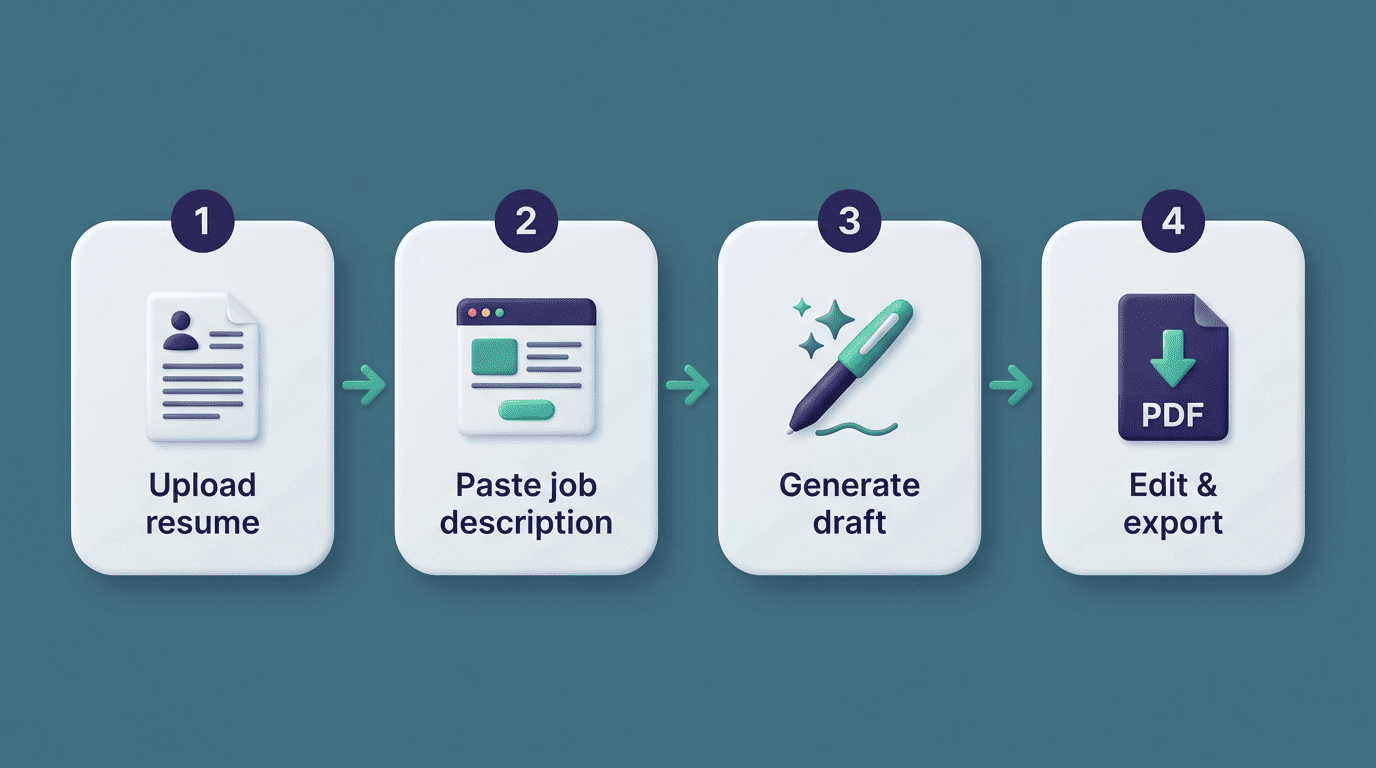
The four-step flow
- Upload or select a resume. Enhancv accepts PDF and DOCX files up to 2 MB; Grammarly accepts DOC, DOCX, and TXT.
- Paste the job description or enter the target job title, so the generator has something concrete to tailor against.
- Generate a first draft in a matter of seconds — the AI cross-references the resume against the job text.
- Edit or regenerate, then export. Jobscan exports to PDF; Enhancv frames the whole process as three clicks from upload to download.
The AI models behind it
The tools differ in which model actually writes the draft, and how much resume-specific tuning sits on top of it:
- Kickresume runs on GPT-4.1, fine-tuned specifically for resume and cover letter writing after training on thousands of resumes, letters, job postings, and recruiter feedback.
- Enhancv combines OpenAI GPT models that have been further tuned by certified resume writers, and also gives users the option to switch to Claude or Gemini for the draft.
- Grammarly runs its own proprietary writing assistant rather than a third-party foundation model — a distinction worth knowing if a user cares which company’s model is producing their draft.
Do AI Cover Letters Pass ATS?
This is the question that decides whether an AI-written letter is worth using at all, since most mid-size and large employers route every application through an Applicant Tracking System before a human ever opens it.
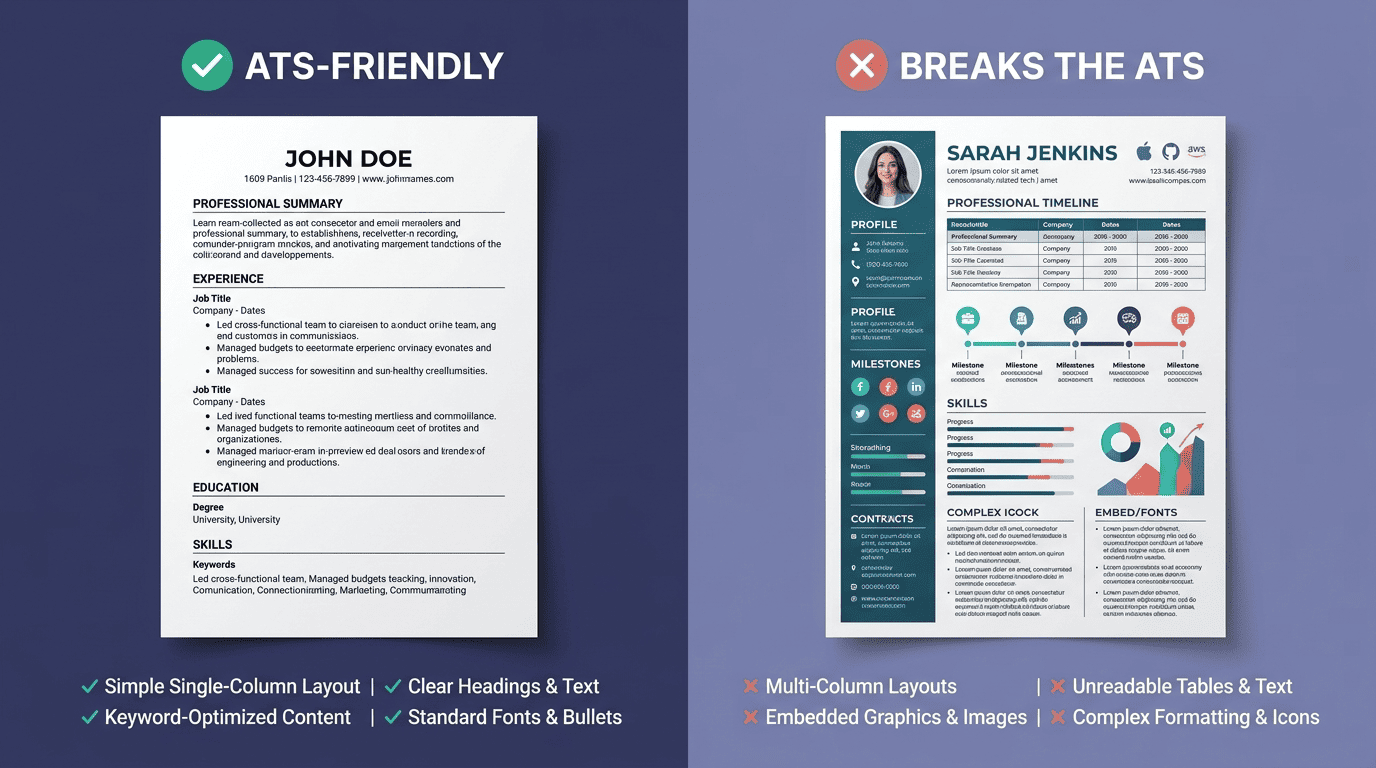
Keyword matching from the job description
ATS-focused tools like Rezi run what it calls AI Keyword Targeting: the system scans the job posting for the exact skills and qualifications it’s looking for and weaves those terms into the generated letter, which raises the odds that a parsing system flags the application as a strong match. Jobscan’s cover letter generator works the same way, describing its job as pinpointing «the exact skills and qualifications» an employer listed and then working them into the draft rather than leaving that matching to guesswork.
ATS-friendly formatting
Keywords alone don’t help if the formatting breaks the parser. Kickresume and Rezi both build their letter templates to be ATS-friendly by default. The elements that most often trip up a parser include:
- Multi-column layouts, since many parsers read left to right and scramble the order of text.
- Embedded tables, which can be skipped entirely or read out of sequence.
- Headers, footers, and text boxes, which some ATS software ignores completely.
- Graphics or icons standing in for text, since a parser can’t extract words from an image.
Grammarly, notably, does not make an explicit ATS-compatibility claim for its cover letter output, which is a real point of difference for anyone screening tools specifically for ATS survival.
| Tool | ATS keyword matching | ATS-friendly formatting claim |
|---|---|---|
| Rezi | Yes (AI Keyword Targeting) | Yes |
| Kickresume | Yes | Yes |
| Jobscan | Yes | Yes |
| Grammarly | Tone/grammar focus, not ATS-specific | Not explicitly claimed |
Where a resume score helps
A resume score checks the underlying document before the letter is ever generated. Rezi Score, for example, runs a resume through 23 criteria on a 1–100 scale, and Rezi reports a 62.18% interview rate among users who apply the scoring feedback. Running that check first shows whether the resume — and by extension the letter built from it — is actually optimized for ATS before either document goes out the door.
Structure of a Strong AI Cover Letter
A cover letter that a generator produces still has to follow the conventions that get letters read past the first paragraph.
The three-to-four paragraph formula
The cover letter format itself hasn’t changed much even as the writing tool behind it has. The consistent target across tools is one page, 250 to 400 words. Enhancv breaks that into three paragraphs: a hook naming the role and company, a middle paragraph covering two to three achievements matched to the posting’s requirements, and a closing paragraph with a specific call to action. Kickresume’s four-paragraph version splits the middle section further — hook, skills match, interest in the company, and closing — which works better for applicants who want to separate «why I’m qualified» from «why this company» as distinct beats.
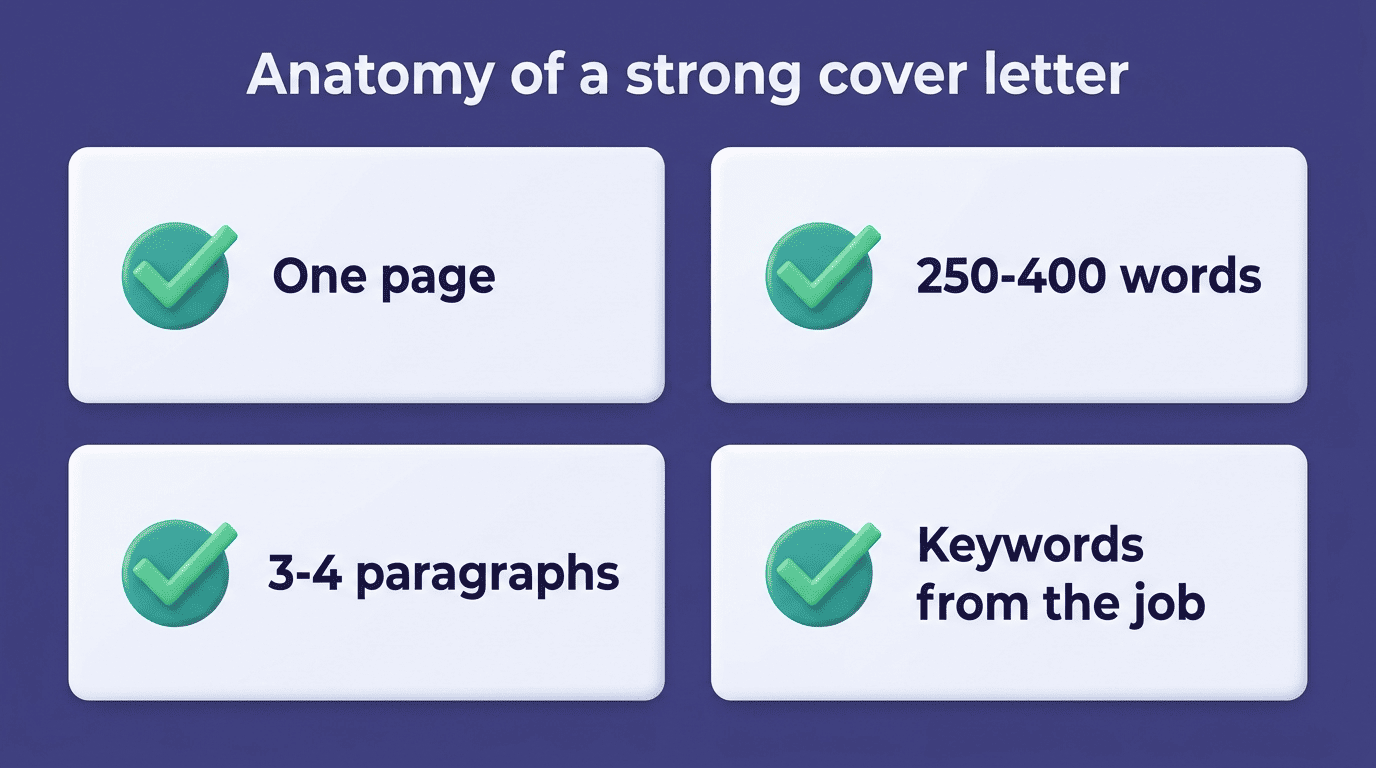
As Jobscan puts it in its cover letter guidance:
Your cover letter should add context to your resume rather than repeat it, expanding on the experience most relevant to the role.
Jobscan
That’s the standard an AI-generated draft has to meet, not just a passing keyword count.
Tone and personalization
Grammarly lets users adjust formality, tone, and length after the first draft is generated, which matters because a raw AI output tends to read generic until it’s edited. Enhancv is explicit that its cover letter output only reliably clears AI-content detectors like GPTZero and Originality.ai once a user has added personal details — a specific project, a specific reason for wanting the role — on top of the machine draft. The USAJOBS Help Center frames the same idea from the federal hiring side: a cover letter exists to highlight relevant skills, goals, and experience that don’t fit cleanly into the resume — which is exactly the personalization step an unedited AI draft still needs.
Free vs Paid: What You Actually Get
Pricing and feature limits vary enough between tools that it’s worth checking before assuming «free» means the same thing everywhere.
What’s free
Free tiers differ enough between tools that «free» doesn’t mean the same access everywhere:
- Enhancv — cover letter generator works with no account registration at all.
- Rezi — one resume, three PDF downloads, and unlimited cover letter generation on the free plan.
- Kickresume — one free cover letter before a paywall appears.
- Jobscan — a seven-day trial with unlimited generation during that window.
- Grammarly — base writing assistant, including basic cover letter help, is free after signup.
When you pay
| Tool | Paid tier | Price |
|---|---|---|
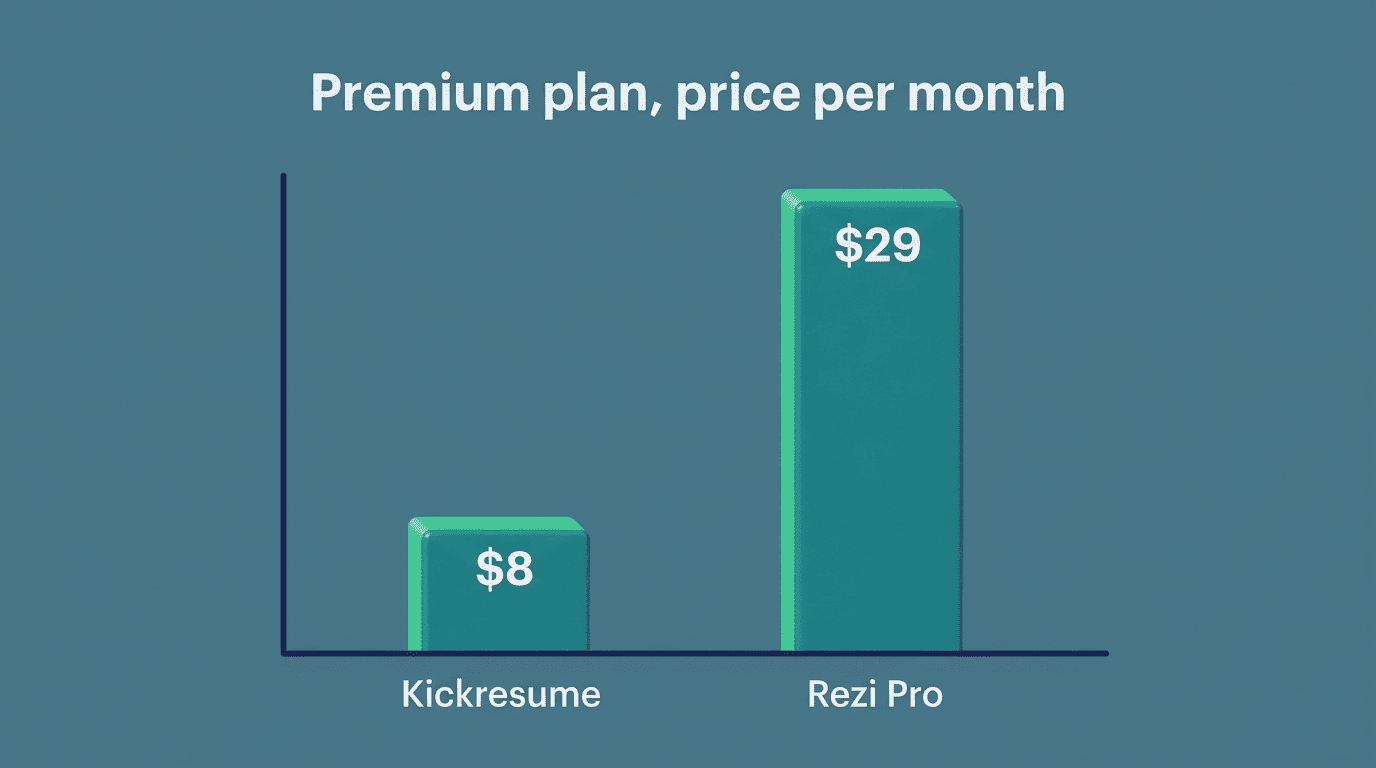
| Kickresume | Premium | From $8/month, billed annually (students free up to 180 days) |
| Rezi | Pro / Lifetime | $29/month or $149 lifetime |
| Jobscan | Premium (Resume Scanner + Builder) | Paid, trial-gated |
| Enhancv | No signup required for generator | Free |
For anyone who wants a free entry point before deciding whether to pay for a full suite, an online AI resume builder that includes letter generation in the same profile is usually the more efficient starting place than testing several single-purpose tools separately.
How to Choose the Right Tool
The five tools referenced throughout this guide aren’t interchangeable — each optimizes for a different priority, and the right pick depends on what an applicant is actually optimizing for.
Match the tool to your priority
If ATS pass-through and a numeric score matter most, Rezi is built for that. Its 23-criteria scoring system and AI Keyword Targeting exist specifically to quantify and close the gap between a resume/letter pair and what a parser is scanning for.
If the priority is templates plus a tight resume-and-letter connection, Kickresume covers that with its 8M+ user base and GPT-4.1 backend. The letter generator’s direct pull from resume data is the core of that pairing.
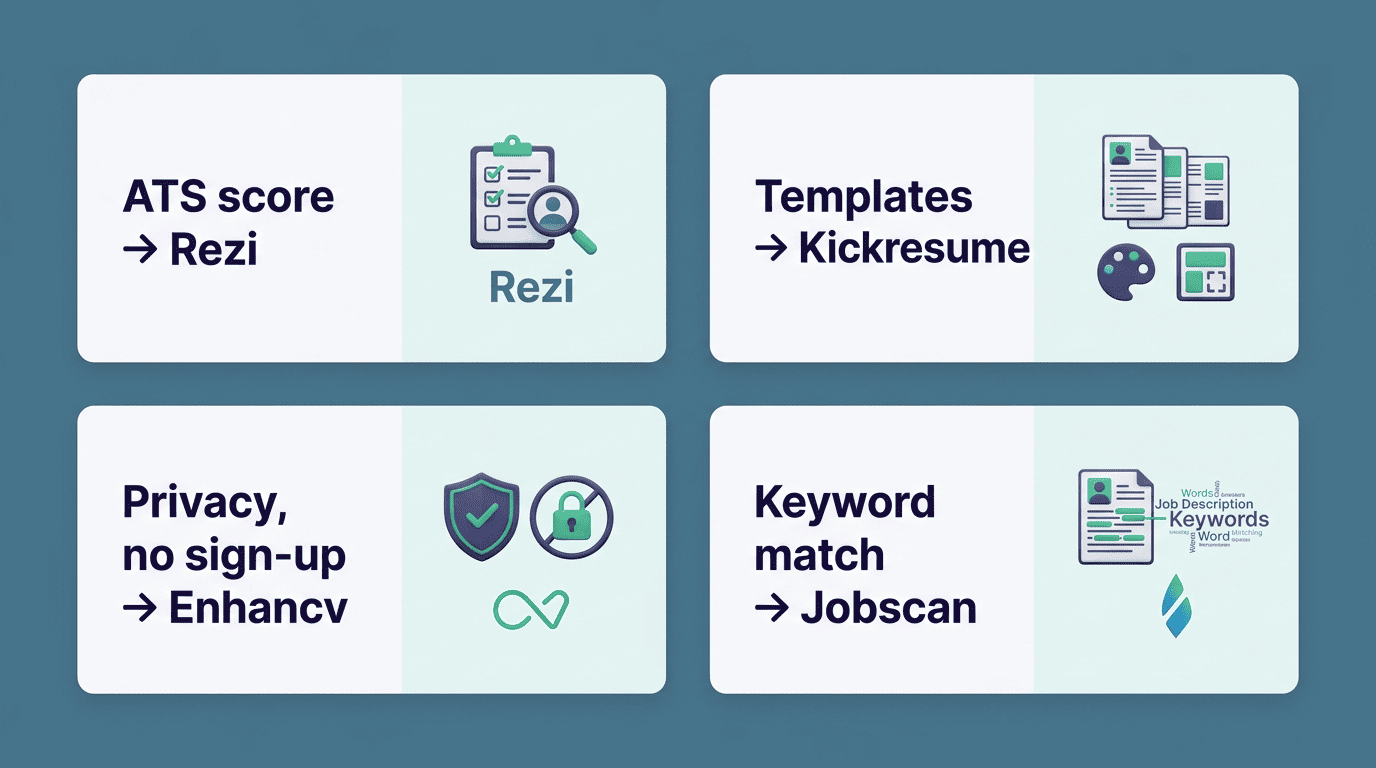
Privacy-conscious applicants who don’t want to create an account tend toward Enhancv, which runs its generator without signup and has helped over 7M people build resumes on the platform.
Jobscan is the pick for applicants fixated on exact keyword overlap between resume, letter, and job description — its interface is built around showing that match score directly.
Grammarly suits anyone whose main worry is tone and grammar rather than ATS mechanics, since that’s where its writing assistant is strongest.
The all-in-one advantage
The practical benefit of an all-in-one tool isn’t just convenience — it’s that edits to the resume propagate to the letter without re-uploading anything. Someone who updates a job title or adds a new achievement to their resume doesn’t have to remember to manually sync that change into a separate cover letter draft; a shared profile does it automatically.